
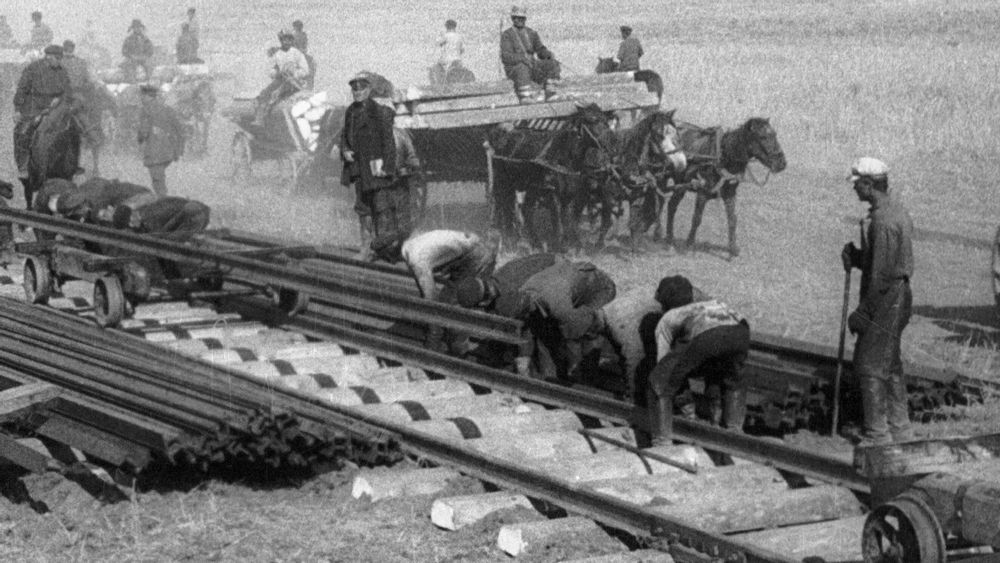
In the early 1870s, there was a need to build a railway network from Orenburg to Tashkent. It is decided to build a railway from the eastern coast of the Caspian Sea to Kyzyl Orvat, Ashgabat and further destinations. The construction of the Caspian railway began in November 1880. In 1885, the railway reached Ashgabat, and in 1886, Chorjoi. In May 1888, with the construction of bridges, railway traffic was opened to Samarkand through Amudarya.
In 1899, 2 railway networks were established from the Ursatevsk (now Khovost) station to Tashkent and to Andijan in the Fergana Valley. After connecting the Samarkand-Andijan railway lines, a network of Central Asian railways passing through the territories of Sirdarya, Samarkand, Fergana, Kaspiyorti and Bukhara Khanate will be created. Currently, the total length of railways is 2354 versts.
In the years after the Second World War, Salar-Barrage (1947), Chorjoi-Kungirot (1957), Navoi-Uchkuduq and Jizzakh-Syrdarya (now Mehnat) (1962), Keles-Uzbekistan (1966), Barrage-Hojikent (1967), Superphosphate (now Marokand)-Kashkadarya (1970), New railway sections such as Termiz-Kurgontepa (1974), Naymankol-Nukus (1975), Nukus-Chimboy (1980) were built.
During the years of independence, great work was done on the formation of new steel tracks in our country. Navoi-Uchkuduq-Sultonuvaistog-Nukus railway lines were built in Kyzylkum deserts. The construction of the Tashguzar-Boysun-Kumkurgan railway, which was built in difficult mountain conditions, gained great importance.
On June 22, 2016, the official opening ceremony of the implementation of a major project of cooperation between Uzbekistan and China - Angren-Pop electrified railway and Kamchik tunnel was held.