
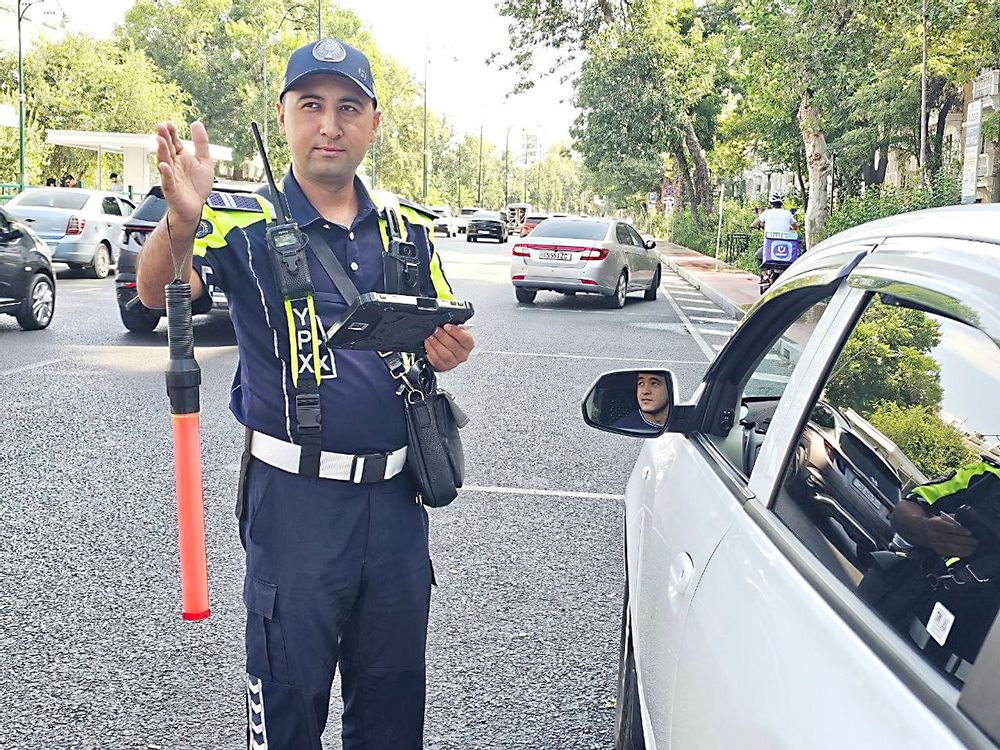
The subject of this article has served in the internal affairs system since 2022. A graduate of the Namangan Institute of Engineering and Technology, the junior sergeant brings a systematic and measured approach to his duties. In dense traffic, he sees more than individual vehicles: he sees a dynamic system in which potential risks must be anticipated to prevent accidents. He is also highly attuned to people’s emotional state. Hesitant manoeuvres, hurried movements behind the wheel, or a sudden lane change can signal distraction, stress, or a loss of concentration.
“The pace of traffic is tremendous,” says Q. Nazaraliyev. “My task is not merely to record a violation, but to prevent danger in time, calm the person behind the wheel, and guide them in the right direction.”
Traffic inspectors are now equipped with modern technology. Mobile tablets, for example, provide immediate access to essential information, shorten routine checks, and help prevent disputes. This frees up time and resources for the main priority: prevention.
The photograph shows Q. Nazaraliyev on duty on Shota Rustaveli Street, one of the city’s main thoroughfares. Reconstruction has fundamentally changed the traffic layout here: a pilot bus rapid transit (BRT) route has been launched, while cycle lanes and new pedestrian crossings have been installed. The upgraded infrastructure requires inspectors to be even more attentive.
No matter how demanding his working days may be, Qahramon has dependable support at home: his wife Mohinur and their three-year-old daughter Sa’diya. Surrounded by the warmth of her family, the child is growing up in an atmosphere of care and respect for the values her parents have instilled in her from an early age.
Radik TUMPAROV,
staff correspondent.
Photo by Ikrom HASANOV.