
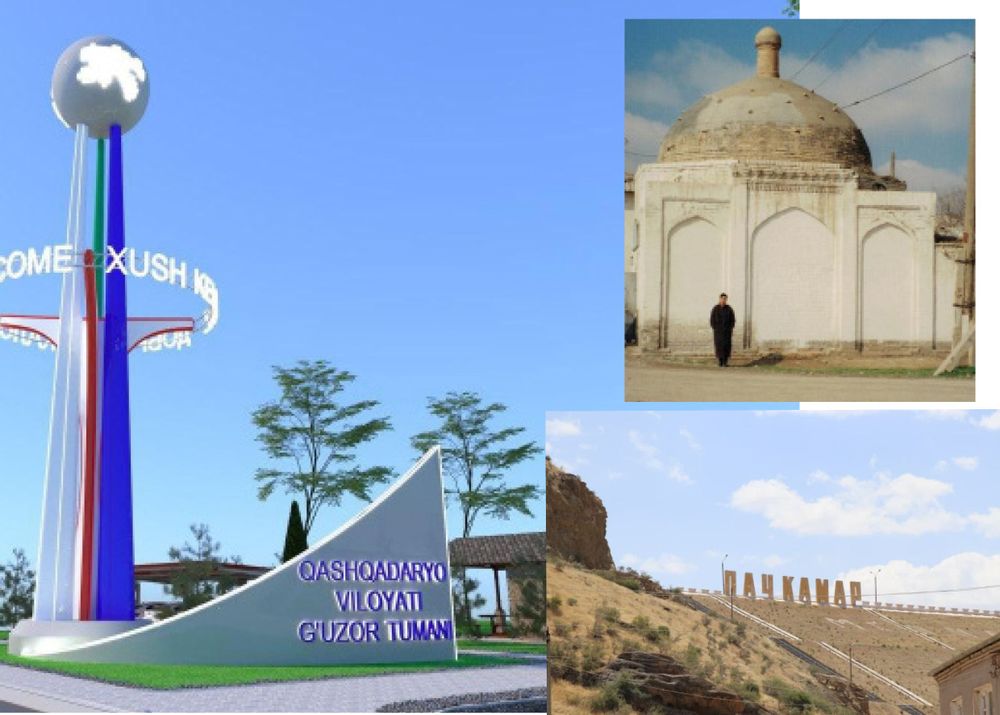
The district is located in the middle stream of Kashkadarya, in the south-east of the region, it borders Qamashi and Chirakchi to the north, Dehkanabad to the east, Karshi and Nishan districts to the west, and the Republic of Turkmenistan to the south.
Kashkadarya flows through the northern edge of the district. There are also Guzordaryo and its tributaries - Katta Oradaryo and Kichik Oradaryo. There is also Pachkamar reservoir in the territory of the district, which is the main source of water for cotton and grain growing. In addition, cattle breeding and horse breeding are well developed in the district.
There are large reserves of gas and gas condensate deposits in the district and adjacent areas of Qamashi, Karshi and Nishon districts.
Guzor is located in a geographically important place. Both in the past and now, the roads leading to Afghanistan, Pakistan, and India passed through this area. Ancient Guzor is one of the regions that was named the Great Silk Road in the past and was of great importance in East-West relations.
Ismail Gaspirali, the founder of the Jadidism movement, in his book "The Matter of Life and Death" mentions the name of Muhammad al-Ghuzari among the world-famous scholars of Ma'mun's time.
At this point, let's dwell on the term "Guzor". Sources say that this word is derived from the Persian-Tajik word "guzar", which in Uzbek means "passage", "kechuv", "lane". Historically, the word was used to refer to strategic points where caravan routes crossed or rivers were crossed. The fact that the district is located at an international road and railway intersection means that it also corresponds to the meaning of "crossing".
In the past, Guzor Bey was one of the important political and economic centers of Bukhara Emirate. There are ancient archaeological monuments such as Yalpoqtepa and Koshtepa in the district.
Before the invasion of Tsarist Russia, during the period of the Bukhara Emirate, Beklik administration was introduced in Guzor. At that time, Beklik, which played a very important role in the management of the southern regions of the country, was ruled by the Mangit dynasty.
Prepared by our correspondent Sadiq RAHIMOV.