
On March 13, 2026, under the leadership of the President, at the meeting of the video selector "On raising the system of working with public appeals to a new level and in-depth analysis of public opinion", a task was given to create a model of the Ministry of Internal Affairs in the direction of working with appeals.
Accordingly, the leadership of the Ministry, the heads of structural and regional units pay special attention to open communication with the population, receive them personally and listen to their problems.
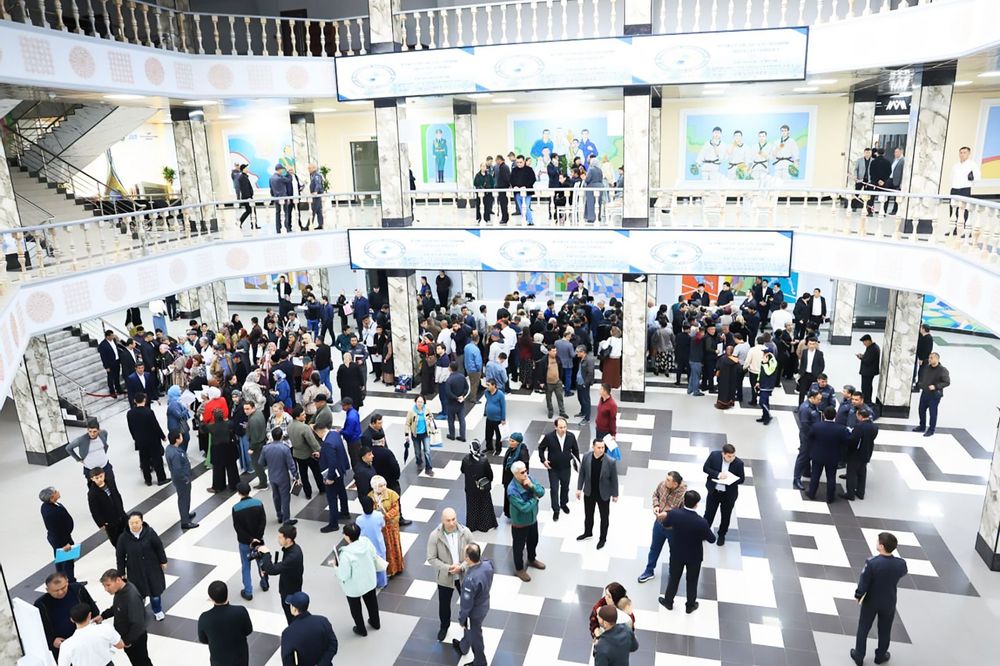
Citizens are received personally by the first leaders on the last Sunday of every month in order to study and find solutions to the problems that have plagued the population in the last year, and open dialogue is held with them.
6,641 citizens were openly communicated with in 11 receptions held in the ministry during the year. In particular, 5,391 citizens were admitted in 2025, and 1,250 in 2026.
In their appeals, citizens mainly addressed problems arising during inquiry and investigation processes (1,642 cases), restoration to the service of internal affairs bodies (1,425 cases), pre-investigation investigations (618 cases), and amnesty and legal status of prisoners (240 cases).
Also, on certain days of the week, private receptions are held by the deputy ministers on the issues of investigation, crime prevention, road safety, and personnel work. In the course of these receptions, open communication was held with 5,711 citizens, and legal measures were taken on the problems.
At the same time, the first leaders of the regional internal affairs bodies are constantly conducting daily personal and weekly public walk-in receptions with the population. In this process, an open dialogue was held with 38,944 citizens, and legal measures were taken on the problems.
It should be noted that in 2025, 148,200 appeals were received from 89,400 citizens to the People's reception desks and the Virtual reception desk of the Ministry of Internal Affairs, and 98,562 of them, or 70 percent, have been satisfied today.
As a result of the implemented systematic measures, the total number of applications received through the virtual reception of the President in 2025 decreased by 32,734 compared to 2024, or by 25 percent.
It is necessary to pay special attention to the communication culture when working with appeals. After all, talking to each citizen according to their character and behavior, calmly listening to their problems and concerns, politely answering their questions serves to strengthen their trust in government agencies. Therefore, every employee of the internal affairs office, regardless of when, where, in what situation, is obliged to be polite with the citizen who applies.
According to the Presidential decree of April 1 of this year "On additional measures to effectively organize the communication system with the population", from May 1, real-time monitoring of applications received at the Virtual Reception will be established. Late appeals are automatically transferred to the higher state body. Also, appeals are divided into "urgent", "ordinary" and "consultation-requiring" categories, and appeals returned to control are reviewed within 3 working days.
According to the decree, the reports of the heads of state bodies and organizations on working with appeals are heard in the parliamentary chambers at least once every quarter. In the regions, the reports of governors and heads of local offices are discussed in the relevant councils. Information services, in cooperation with public receptions, cover the process of working with appeals and analyze the objections expressed in the mass media.
The decree also established the establishment of the Presidential People's Reception Hall. It is led by the mayors of Karakalpakstan, regions, Tashkent city, and district and city mayors on a public basis and receives citizens regularly and takes measures to solve problems on the spot.
In addition, a separate reporting procedure will be introduced by the heads of ministries and agencies during presentations on systemic problems and their solutions raised in public appeals. Personal and traveling receptions conducted by state bodies and hokims will be fully digitized and control over the process will be strengthened.
Applications are monitored in real time in the virtual reception of the President. It was noted that objections in mass media and social networks affect the efficiency of information services of state bodies.
Therefore, the information service of the ministry constantly studies the objections expressed in the mass media and social networks regarding the consideration of appeals. Because now this situation is taken into account in the evaluation of their performance.
Ozodbek JORABOYEV,
MIA With appeals
head of the work department,
colonel